
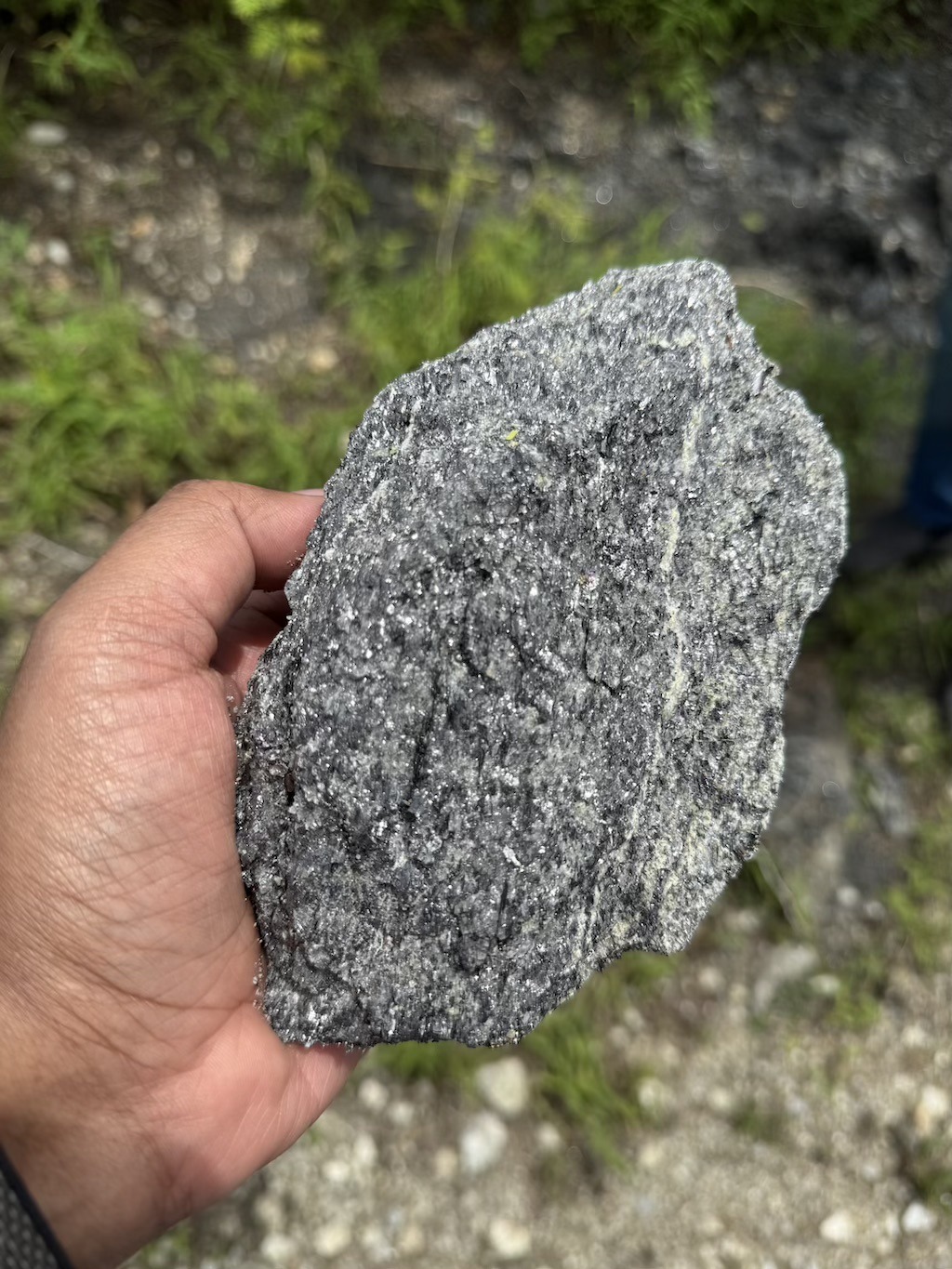
Natural graphite is a crystalline form of carbon that occurs naturally in the Earth’s crust. It is composed of carbon atoms arranged in layers of hexagonal lattices, which gives graphite its unique combination of properties: it is soft, slippery, electrically conductive, and highly resistant to heat.
Unlike many industrial materials that are manufactured synthetically, natural graphite forms through geological processes over millions of years, typically in metamorphic rocks subjected to high temperatures and pressures.
Because of its stability and conductivity, natural graphite has become an essential material in industries ranging from foundry and metallurgy to batteries, lubricants, and refractories.
How Natural Graphite Forms
Natural graphite is created when organic carbon present in sediments undergoes metamorphism. Over long geological timescales, heat and pressure transform this carbon into crystalline graphite.
This process usually occurs in:
- Metamorphic rocks, such as schists and gneisses
- Carbon-rich sediments that have been buried deep within the Earth
- Areas with significant tectonic activity
The resulting graphite deposits can vary widely in purity, flake size, and mineral composition depending on the geological environment in which they formed.
Types of Natural Graphite
Natural graphite occurs in several forms, each with different industrial characteristics.
Flake Graphite
Flake graphite forms as thin, plate-like crystals embedded in metamorphic rock. It is the most widely used type in industrial applications due to its high purity and excellent conductivity.
Typical uses include:
- Refractories and crucibles
- Lubricants
- Brake linings
- Batteries
Amorphous Graphite
Despite the name, amorphous graphite is microcrystalline graphite with very fine particles. It generally forms from metamorphosed coal deposits.
It is commonly used in:
- Refractories
- Foundry coatings
- Carbon additives
Vein (Lump) Graphite
Vein graphite occurs as solid veins filling fractures in rock and can reach very high purity levels. It is relatively rare compared with other forms of graphite and is sourced primarily from Sri Lanka.
Key Properties of Natural Graphite
Natural graphite is valued in industry because of its distinctive physical and chemical properties.
1. High Thermal Stability
Graphite can withstand temperatures exceeding 3000°C in non-oxidizing environments, making it ideal for high-temperature applications.
2. Electrical Conductivity
The layered structure of graphite allows electrons to move freely, giving it good electrical conductivity.
3. Lubrication Properties
The layers in graphite slide easily over one another, which makes graphite an effective solid lubricant.
4. Chemical Inertness
Graphite is resistant to many chemicals and does not easily react with most acids and bases.
5. Lightweight but Strong
Despite being relatively soft, graphite has strong covalent bonding within its layers.
Common Industrial Uses of Natural Graphite
Natural graphite is widely used across many industries because of the properties described above.
Major applications include:
- Refractories used in furnaces and metal processing
- Crucibles for melting metals
- Lubricants for high-temperature or high-load environments
- Brake linings and friction materials
- Battery anodes, especially in lithium-ion batteries
- Foundry coatings and mold releases
The specific form, purity, and particle size of graphite required often varies significantly depending on the application. Read more on our Applications page.
FAQs About Natural Graphite
1. Is natural graphite the same as the graphite used in pencils?
Yes. Pencil “lead” is actually a mixture of natural graphite and clay. Adjusting the ratio of graphite to clay changes the hardness of the pencil.
2. Is graphite a metal?
No. Graphite is a non-metallic mineral composed entirely of carbon, although its metallic appearance and electrical conductivity sometimes lead to confusion.
3. Where is natural graphite mined?
Major graphite-producing countries include China, Tanzania, Brazil, Madagascar, Mozambique, and Canada.
4. What determines graphite quality?
Quality is usually determined by several factors, including carbon content, flake size, mineral impurities, and moisture levels.